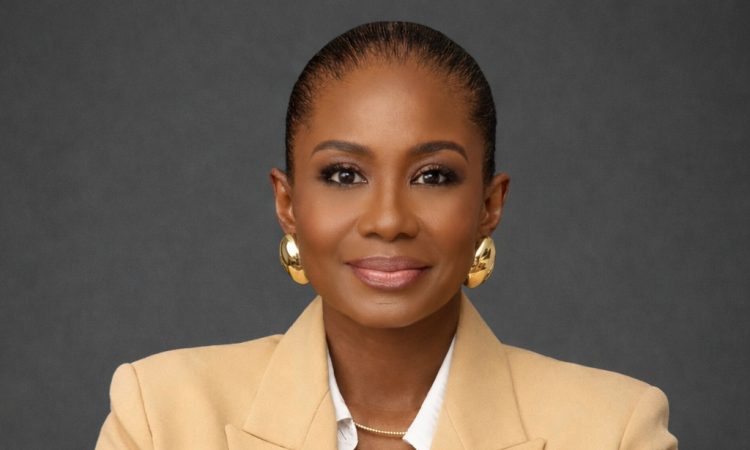

By Jumoke Adejumobi-Owodunni CEO, MorganPeak Limited | Strategic Advisor to Financial Institutions.
There is a conversation happening in boardrooms across Lagos, Nairobi, Accra, and Johannesburg. It goes something like this: FinTech is eating our lunch. What do we do?
It is the wrong question.
Over the past decade, African financial institutions have watched a new generation of technology-driven companies rewrite the rules of financial services. Flutterwave, Paystack, Moniepoint, Carbon, M-Pesa. These names that did not exist twenty years ago now process billions of dollars in transactions, serve millions of previously unbanked customers, and attract global capital at valuations that rival traditional banks built over generations. Nigeria alone has seen over $3 billion in FinTech investment in the last five years. The CBN has issued digital banking licenses. Open banking frameworks are being developed. The direction of travel is clear.
But this is what the panic misses: FinTech has not made banking irrelevant, It has only made transactional banking partly irrelevant.
And those are not the same thing.
What FinTechs Actually Disrupted
To understand what is really happening, we need to be precise about what FinTechs disrupted and what they did not.
FinTechs disrupted friction. They disrupted the queue, the form, the five-day turnaround, the opaque fee structure, and the indifferent customer service that had defined banking for ordinary Nigerians for decades. They gave people speed, simplicity, transparency, and control. In doing so, they earned something banks had long taken for granted: Trust.
What FinTechs have not disrupted and cannot easily disrupt is depth. The depth of a relationship between a senior banker and a corporate client navigating a difficult restructuring. The depth of conversation that happens when an HNI is deciding where to park significant capital and needs more than a rate sheet. The depth of insight that comes from a relationship manager who has followed a client’s business through two economic cycles, three CBN policy shifts, and one near-collapse.
Data can inform decisions. Algorithms can flag opportunities. Platforms can execute transactions in seconds. But none of these tools can hold a difficult conversation. None of them can read the room. None of them can earn the kind of trust that makes a CEO pick up the phone on a Sunday.
That remains a deeply human capability.
The Inconvenient Truth About Relationship Management
Here is where I will say something that may be uncomfortable for some in the industry: the problem is not that FinTechs are too good. The problem is that too many relationship managers have not kept pace with what clients now expect.
Having spent over two decades in corporate and investment banking, including years covering financial institutions across West Africa — and having since worked closely with banks on building the next generation of RM capability, I have seen this gap across board. Clients who once tolerated account maintenance disguised as relationship management now have choices. Sophisticated clients like HNIs, corporates, institutions are not leaving banks for FinTechs. But they are raising the bar on what they expect from the humans who serve them.
They want strategic thinking, not just product knowledge. They want proactive insight, not reactive problem-solving. They want an advisor who understands their industry, their ambitions, and their risks, not just their current account balance.
The relationship managers who thrive in this environment will be those who have made the transition from transaction facilitator to trusted advisor. That transition requires investment in skills, mindset, and in the systems that allow RMs to focus on what only humans can do.
The Augmented Relationship Manager
The future of banking in Africa is not a choice between the human and the digital. It is the deliberate, strategic integration of both.
The most effective relationship managers of the next decade will be what I think of as augmented. This means professionals who use technology as a force multiplier for their most valuable asset and their human judgment. They will use AI-driven client intelligence tools to walk into every meeting already knowing what their client needs before the client has articulated it. They will use data to identify portfolio stress, cross-sell opportunities, and churn risk before it becomes visible to the naked eye. And then they will use the irreplaceable tools of emotional intelligence, trust, and deep sector expertise to act on that intelligence in ways no platform can replicate.
This is not a distant vision. It is already the competitive differentiator between the banks that are growing wallet share and those that are losing it.
The institutions that will lead African banking over the next decade are not the ones that simply digitise their services. They are the ones that build relationship managers who are as comfortable with a CRM dashboard as they are in a boardroom, and who understand that the goal of every digital tool in their arsenal is to create more space for the human conversation not to replace it.
What Must Change
For this future to materialise, three things need to shift.
First, bank leadership must stop treating relationship manager development as a cost and start treating it as a competitive strategy. In markets where products are rapidly converging and digital infrastructure is becoming table stakes, the RM is the differentiator. Underinvesting in their capability is the equivalent of buying the best trading platform and then not training your traders.
Second, performance management must evolve beyond revenue targets. A relationship manager who hits their numbers this quarter by being transactional is destroying the long-term value of the client relationship. Banks need metrics that capture client depth, advocacy, and advisory quality, not just what has been booked.
Third, the industry needs to invest in building a community of practice around RM excellence. Across Africa, tens of thousands of relationship managers are navigating this disruption largely without peer support, structured development pathways, or access to the kind of cross-border intelligence that would make them genuinely world-class. That isolation is a strategic liability.
A Continent-Wide Opportunity
Nigeria has the talent. Africa has the market. The question is whether our financial institutions will invest in the human infrastructure needed to lead it.
The FinTech revolution did not signal the end of relationship banking. It signaled the end of mediocre relationship banking. For institutions willing to make the distinction and act on it, the opportunity ahead is extraordinary.
The future of banking in Africa will be built by professionals who are both digitally fluent and deeply human. That combination is rarer than it should be. And for the banks that develop it deliberately, it will be worth more than any technology investment they will ever make.
Jumoke Adejumobi-Owodunni is the founder and CEO of MorganPeak Limited, a Lagos-based capability-building and strategic advisory firm serving banks and financial institutions across Africa. She has over 20 years of experience in corporate and investment banking and has worked with leading financial institutions across the continent on relationship management excellence and leadership development.