Before Being Suckered, Beware: Parasocial Interaction is Campaign Strategy!



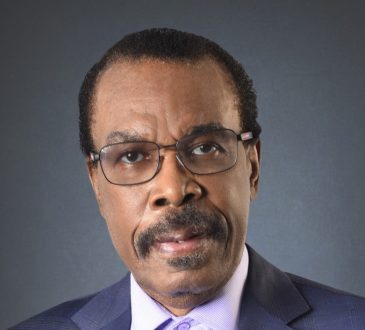
By Ugochukwu Ugwuanyi
Although not in the manner that parasocial interaction (PSI) typically presents, the extent to which Nigerian politicians go to court constituents while on the campaign trail reflects PSI. It is what it is when they stop by the roadside to patronise the roasted corn seller and immediately snack on the same without any care in the world that they are in the midst of a crowd! You can even find them collecting a random baby from the mother’s back and fondly cuddling the infant while rapping the people in whistle-stop tours.
What is Parasocial Interaction?
The Cambridge Dictionary defines ‘parasocial’ as an adjective “involving or relating to a connection that someone feels between themselves and a famous person they do not know, a character in a book, film, TV series, etc., or an artificial intelligence.” It has also been defined as a one-sided emotional bond formed with famous personalities like party candidates, where devotees feel the kind of familiarity and intimacy that is not actually requited.
In recent times, the term has been deployed to describe “a type of relationship between a person and a non-person, for example, a celebrity”. It leaves their fans high and dry, delivering both feelings with equal celerity. The relationship fits into the playbook of politicians because it serves their purpose without any actual commitment from them.
PSI Has Been Deluding Audiences since the 50’s
Parasociality goes beyond an obsession with a cult leader into making one convinced that this hero knows you as much as you know them. The phenomenon dates back to a 1956 study, Mass Communication and Para-Social Interaction, where Donald Horton and Richard Wohl observed that television viewers engaged in “para-social” relationships with on-screen personalities, resembling those they formed with “real” family and friends. It started as a specialist academic term before becoming a tool for mainstream conversations.
As the Cambridge Chief Editor, Colin McIntosh, puts it, parasocial interaction “was originally coined as an academic word and was confined to the academic sphere for quite a long time. It’s only fairly recently that it’s made a shift into popular language, and it’s one of those words that have been influenced by social media.
The paradigm has evolved over the years, showing the resilience and adaptability that make it relevant in strategic political communication. There is no distancing it from the lived attention economy and AI chatbots of the present day, which perhaps explains its emergence as the Cambridge Dictionary’s Word of the Year 2025.
How Nigerian Politicians are Making a Play of PSI
By the definition cited above, the relationship between Nigerian politicians and the people is parasocial, stupid! During electioneering, they try to make the electorate see them as transparent, as if what they see is what they get. But the people soon realise when they’re voted into office that they don’t know these politicians at all.
In a multi-ethnic and multi-cultural constituency, they become tribesmen to sell their candidacy to bigoted folks. Through PSI, they make people from their neck of the woods own their campaign, basking in the symbolism of political representation at the highest levels and the anticipated preferential treatment for their kind and the development of their places of origin.
But after riding these tribal or religious considerations to get into office, the politician first takes care of themselves, their families, friends, and associates – many of whom may not even be members of their communities. By the time they’re through catering to these interests, nothing but crumbs are left for “their people”. This has continued to make nonsense of the psychic-political affinity established during the campaigns, which should be the symbolic conduit through which people vicariously connect with governments.
Another manifestation of PSI will be the cameo appearances candidates make in their constituents’ social events, freely mingling with those on the scene. Yet, their type when eventually elected would rather address grieving victims of violence from an armoured personnel carrier. That’s parasocial interaction for you. It creates the fantasy of fraternity between the follower and the followed when none really exists in the reckoning of the latter. There is also the pervasive vote-buying on Election Day which appears a friendly gesture but mortgages the people’s future, giving the politician more reason to distance himself from the people afterwards.
Well, much as they try, Nigerian politicians can’t beat their Western counterparts at PSI. Campaign arenas turn electric when candidates shockingly call some obscure supporters or neighbourhood leaders by name, inviting them to the rostrum to address the audience. It gives such a follower an intimate connection, but for the candidate, it ends there. PSI is indeed a global strategy.
If Befriending the Masses is impracticable, Bonding with and Retaining Volunteers Shouldn’t Be!
Now, if establishing familiarity with strangers who believe in these politicians is too much to ask, how about their team of volunteers with whom they’ve had frequent meetings? These foot soldiers will be hosted at the candidate’s guesthouses, where they will have one-on-one discussions with the candidate over sumptuous meals, encouraged to contribute ideas on how the party will carry the polls.
Still, this won’t be enough to register them in the minds of the candidates as veritable partners. If these volunteers get ahead of themselves to let out any inconvenient truth at such meetings, they will instantly have stern-looking protocol officials on their side to escort them out of the room, never to be allowed into the caucusing again.
Even for those who were committed as ambassadors and advocates of the principal’s agenda, they often find themselves in the cold when their man eventually wins. While in the lurch, they watch a different set of people who were nowhere to be found during the heavy lifting brought in to call the shots and enjoy the spoils of war.
This is where Nigerian politicians must temper parasocial interaction with graciousness. They should be more intentional in their interactions with internal teams during electioneering to identify smart alecs they can work with when they make it to power. It is said that opportunities in government are like the meat of an elephant, which, when shared appropriately, should go round. At least, you must have heard of some Nigerian governors appointing as many as 200 special assistants – that is in addition to other coteries of aides.
The least these politicians can do is to retain the services of these volunteers to continue showing the electorate they convinced to vote for the candidate how their man is living up to the mandate, unless these politicians have no intention to deliver on their campaign promises.
Ugochukwu, a Branding Strategist and Media Trainer, welcomes feedback via nmiringwu@gmail.com