REIMAGINING EDUCATION IN THE AGE OF AI: Why Nigeria Must Rethink How We Prepare Talent



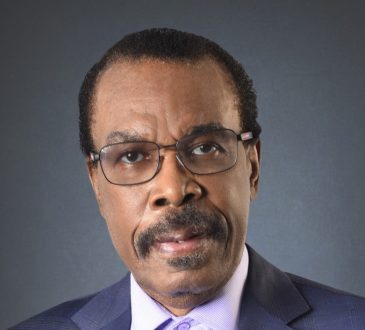
By the Provost, 02 Academy Nigeria
I have spent years working closely with young people, brilliant, ambitious, full of promise. Yet, I continue to see a pattern that should concern every educator and industry leader: potential without preparation.
But today, that gap is no longer just about curriculum versus industry.
It is about **education versus acceleration**.
Because while our institutions are still evolving at a steady pace, technologies like Artificial Intelligence are evolving exponentially. And that changes everything.
The question is no longer whether students are ready for the workforce.
The question is: **are they ready to compete with and collaborate with intelligent systems?**
**AI Has Redefined What It Means to Be Valuable**
There was a time when knowledge alone was power. Today, knowledge is everywhere, accessible, searchable, and increasingly automated.
AI can write, analyze, design, predict, and even simulate decision-making.
So we must ask ourselves honestly:
If a machine can do it faster, cheaper, and at scale **why are we still training students to do only that?**
The value of the human mind is shifting.
From memorization → to interpretation
From execution → to judgment
From repetition → to creativity
This is not a future scenario. This is already happening.
Education Must Move From Teaching Answers to Training Minds
In an AI-driven world, the role of education must fundamentally change.
We must stop positioning students as repositories of information and start developing them as:
* Critical thinkers who can question AI outputs
* Creative problem-solvers who can go beyond automation
* Ethical leaders who understand the implications of intelligent systems
* Adaptive learners who can continuously evolve with technology
At 02 Academy Abuja and Lagos, we are intentional about this shift. We expose students not just to tools, but to thinking frameworks, because tools will change, but the ability to think will remain the ultimate advantage.
**AI Is Not the Threat Irrelevance Is**
There is a growing fear that AI will replace jobs. That fear is not entirely misplaced but it is incomplete.
AI will not simply eliminate jobs. It will redefine them.
The real risk is not that machines will take over.
The real risk is that we will continue to produce graduates who are not prepared to work alongside them.
This is where many institutions are falling behind, by treating AI as an add-on, instead of a foundation.
AI literacy must become as fundamental as reading and writing.
Not everyone needs to become an AI engineer. But everyone must understand how AI works, where it applies, and where it fails.
**From Consumers of Technology to Creators of Value**
Nigeria cannot afford to remain a passive consumer of global innovation.
If we do not train our young people to build, adapt, and innovate with AI, we risk deepening dependency rather than driving progress.
Our goal must be clear:
To raise a generation that does not just use AI, but **leverages it to solve African problems at scale.**
From healthcare to agriculture, finance to education, the opportunities are immense.
But they require a workforce that is both technically aware and contextually grounded.
**The Responsibility of Educational Leadership**
As a provost, I do not see my role as simply overseeing academic programs. I see it as designing relevance in real time.
That means constantly asking difficult questions:
* Are we teaching what matters now or what used to matter?
* Are our students building, or just studying?
* Are we preparing them for jobs or for a shifting landscape of opportunities?
Leadership in this era requires speed, clarity, and the willingness to disrupt even our own models.
**The Way Forward**
Nigeria does not lack intelligence. It does not lack ambition. What we must urgently build is alignment, between education, industry, and technology.
AI has accelerated the future. Education must catch up.
We must move from static systems to dynamic learning environments.
From rigid curricula to responsive frameworks.
From isolated classrooms to connected ecosystems.
Because in the end, the goal is not just to educate students.
It is to equip them to think independently, act intelligently, and create value in a world where intelligence itself is no longer exclusively human.
And that is the standard we must now rise to.